The Nightmare of Retaliatory Devotion: Why Curry Barker’s Obsession is the Definitive Modern Horror Fable
Pop culture has spent decades selling a dangerous lie: that love is a war of attrition. We have been trained by endless romantic comedies to believe that if an awkward, insecure man just pines hard enough, waits long enough, and refuses to take “no” for an answer, the universe will eventually reward his persistence. The girl will look at him, the scales will fall from her eyes, and she will choose him.
Writer-director Curry Barker’s theatrical debut, Obsession, takes that exact cinematic fantasy, drags it into a dark room, and tears it apart in the bloodiest, most psychologically distressing way possible.
Following his viral, micro-budget YouTube success Milk & Serial, Barker has parlayed a modest budget into a mainstream horror triumph. Executively produced by Jason Blum and picked up by Focus Features, Obsession is a masterclass in subverting male entitlement, translating the modern anxieties of Gen Z and Millennial dating into a visceral, blood-drenched tragedy.
The Plot: Careful What You Wish For
At the center of Obsession is Baron “Bear” Bailey (played with an effectively pathetic, fragile charm by Michael Johnston), a painfully average music store employee living in his late grandmother’s house. Bear is desperately, cripplingly in love with his childhood best friend and coworker, Nikki (Inde Navarrette). He is the archetype we are usually told to root for: the shy, lonely “nice guy” who is too terrified of rejection to ever simply be honest.
When a series of minor personal miseries—culminating in the sudden death of his cat—leaves Bear at his lowest emotional ebb, he turns to a desperate shortcut. While shopping for a gift, he stumbles across a sketchy novelty item called the “One Wish Willow.” Out of a mixture of cowardice and entitlement, Bear snaps the stick and wishes for the impossible: that Nikki would love him more than anything else in the whole world.
The wish is instantly granted. Nikki goes home with him that very night. But the cosmic scales demand balance, and Bear quickly learns that there is a vast, terrifying chasm between a woman choosing to love you and a woman being supernaturally forced to possess you.
The Metamorphosis of Inde Navarrette
What begins as an awkward, slightly surreal comedy of a clingy girlfriend rapidly devolves into a grueling psychological thriller and body horror showcase.
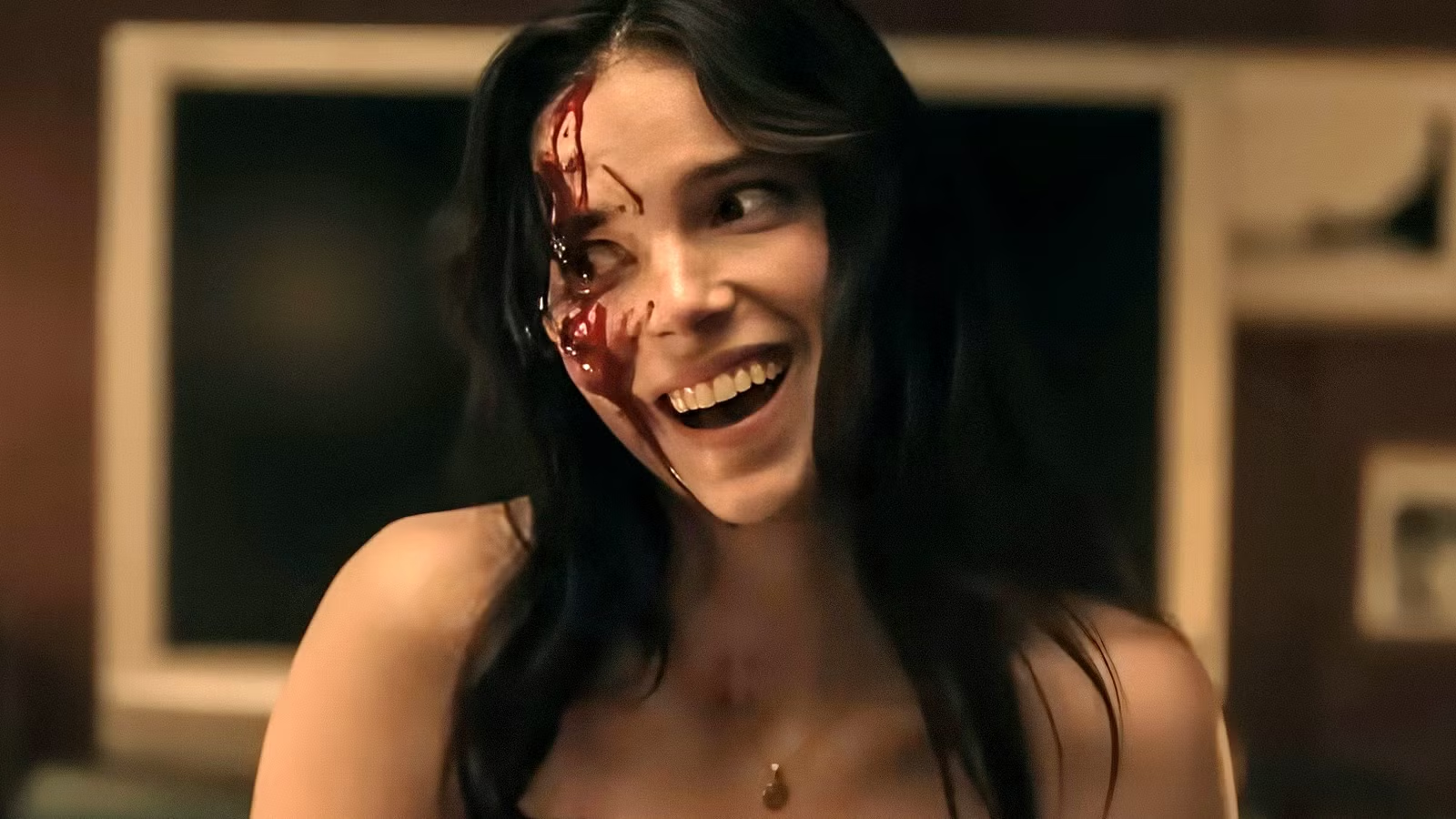
The undisputed anchor of the film is Inde Navarrette. In the opening act, she establishes Nikki as vibrant, sharp-witted, independent, and fiercely protective of her creative aspirations to write a “love story” (explicitly noting to Bear that a romance and a love story are not the same thing).
Once the curse takes hold, Navarrette’s physical transformation is nothing short of harrowing:
- The Uncanny Valley of Affection: Her posture stiffens, her eyes lose their spark, and her warmth is replaced by a wide-eyed, unblinking fixation.
- Nightmarish Vignettes: Barker utilizes terrifying, minimalist horror imagery—Nikki peeping from pitch-black bedroom corners, standing frozen in the middle of the night, and letting out sudden, guttural shrieks.
- The Ghost in the Machine: In the film’s most tragic undercurrent, Barker shows us glimpses of the “real” Nikki trapped inside her own mind, speaking briefly to Bear while her cursed, amorous alter-ego sleeps. Her body is no longer her own; she has been completely dispossessed of her consent.
A Mirror to the “Manosphere” and Dating Malnutrition
On a thematic level, Obsession acts as a diagnostic tool for modern relationship anxieties. The supernatural iteration of Nikki is, ironically, the exact blueprint of a “dream girl” demanded by certain toxic corners of the internet and the manosphere: she is entirely submissive, highly sexual, deeply needy, completely devoted, and her entire existence is centered around her man.
By giving Bear exactly what a deeply insecure patriarchy thinks it wants, the film exposes the inherent horror of total possession. When Nikki’s devotion escalates into brutal, visceral acts of violence against Bear’s social circle—including a jaw-droppingly graphic scene involving a steering wheel—Bear finds himself on the receiving end of fanatical infatuation. He is trapped, suffocated, and entirely unsafe in his own home.
The film’s terror doesn’t just come from the blood; it comes from watching a vibrant woman be reduced to an absolute shell of herself just to satisfy a man’s fragile ego.
The Verdict: A Sharp, Melancholic Genre Blend
Barker, who also edited the feature, balances a remarkably tricky tone. The film seamlessly blends laugh-out-loud social awkwardness with sudden bursts of shocking, R-rated violence. While some critics argue that the mechanics of the One Wish Willow are a bit clumsy, and that the third act occasionally veers into cartoonish brutality, the emotional pacing is airtight.
Obsession works so effectively because Bear isn’t a cartoon villain; he is a weak, frightened person who made a catastrophic, selfish choice because he was too afraid to communicate. It is a bleak, deeply felt tragedy wrapped in a monster movie—a cautionary tale for the app era that proves forcing someone to love you is the fastest way to ensure you both end up destroyed.